The Horse's Advocate Community Area

Find answers, ask questions, and connect with our
community around the world.

The Horse’s Advocate Forums No Grain Challenge Psyllium on the no-grain diet?

Tagged: 

  • Psyllium on the no-grain diet?

    Posted by Kathy on July 9, 2021 at 6:34 pm

    Hi Doc T:

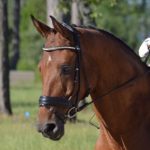
    I’m not sure of the best forum to post this. My GP dressage horse struggles when he needs to pass manure. I have trouble getting him through and engaged and using his back until he’s comfortably passed everything. In fact, I have trouble getting him to even move when he needs to go. As a prey/flight animal horses are supposed to be able to drop manure on the go. All the many other horses I’ve had over the years were able to pass manure on the go, even at a gallop or over a jump. This has been an issue for this horse 5-1/2 years I’ve had him (the last 2-1/2 years he has been completely compliant with your diet recommendations). He is out on pasture 24/7 (coastal burmuda now, winter rye in the cold months), gets some SBM and a flake of alfalfa twice a day. Good well water and a Himalayan salt block. His manure looks right and comes frequently. Thursday he stopped on the way to the arena and dropped a full load, but proceeded to drop two more partial loads within the first 30 minutes of work. He’s basically unable to work well until this is done. It doesn’t matter if he’s had a long walk (hour) before work, a 10-minute hack, or goes straight to the ring. It was pretty devastating to haul all the way to regionals a few years ago just to have him decide to become an immovable object trying to pass manure as we moved off from the initial halt, then never really come right during the test.

    My vet, who is very supportive of the no-grain diet, has palpated his rectum and it appears completely normal. He suggested I give him 1/4 C of straight psyllium mixed into his SBM twice a day for a week or two, and see if that helps things move more readily/completely. I’d appreciate your thoughts on the addition of psyllium or any other suggestions.

    I would probably go with something like this (https://www.walmart.com/grocery/ip/Equate-Clear-Soluble-Fiber-Powder-12-3-oz/38345537) that is strictly psyllium rather than Sand Clear that has a lot of extra stuff in it.


    Doc-t replied 3 years, 11 months ago 2 Members · 4 Replies
  • 4 Replies
  • Doc-t

    Administrator
    July 10, 2021 at 9:35 am

    Psyllium is basically the soluble fiber cell walls of some dicots and all grasses. It is found in the hulls of the genus Plantago seed that are ground up into a powder. Within this structure of fiber (called xylan) can be found a clear, colorless, gelling agent called mucilage. When mucilage is exposed to water, it can swell up to 10 times the volume. Therefore psyllium with its mucilage can absorb water causing the manure to retain more water than normal. This then reverses constipation.

    Adding psyllium to horses is a common cure for sand colic. However the effectiveness of this is anecdotal with a high forage diet working as well or better than psyllium. My thoughts include any reduction in transit time of manure within the gut to cause more resorption of water and hence dryer feces.

    The question lies in determining the cause of dry feces. Is it a lack of water intake (dehydration) or is it decreased gut motility / transit time?

    Dehydration can come from inadequate access to water( neglect, arid environment) or an inadequate or improper use of ADH (antidiuretic hormone produced by the pituitary) or an inability of the hypothalamus to determine correctly urine concentration. Other areas to look include kidney function and blood pressure which can affect body water concentration. Any cause of dehydration will create dry feces.

    Gut motility can be caused by gut inflammation and you have eliminated this with the diet. It would be interesting to know if your horse had free fecal water (the squirts) before you changed to a non-inflammatory diet. Other things to cause decreased gut motility can be weeds and other plants (belladonna is very good at stopping gut motility) and stress. From your story here it appears the stress of entering the ring and performing is causing more (painful) constipation.

    While giving you and your horse Valium before showing might be an answer…. Just kidding. But try to asses the stress levels of both of you and work on this. I don’t know because I don’t know you. It’s just something to think about. Does placing the saddle or grooming or bridling all seem to stress him? Maybe he doesn’t show this in any other way other than to decrease gut motility. What is the manure like when turned out for days without any stress?

    How about this trick (in alignment with your vet). Feed meals of soaked hay cubes – a mush or soup – if he will eat it before shipping to an event or even the morning of training.. This will directly add water to the bowel that will remain in a reduced transit scenario. While psyllium given requires adequate water intake and regulation, adding water directly to the food works without these factors. Another thought is to warm the water especially in cooler weather.

    In the 1970’s we cooked our oats with water in large cookers. The resulting oatmeal placed in a large wheelbarrow was then layered with 6 inches of wheat bran. After 30 minutes we used a shovel to mix it all together. We then placed our chapped hands in this miix effectively “un-chapping” them. Finally we fed this to the horses who devoured the meal. This seemed to prevent impaction colics in the cold weather.

    On our farm in NY we heated the water in the stock tanks in the dead of winter and the water consumption exceeded the summer months. All manure remained “wet.”

    So think of ways to increase water consumption in your horse as you look at what might be causing the stress and address that too. Tho identifying the stress or eliminating them (you still need to trailer your horse to the show and ride him) may be difficult, adding water is simple. Also be honest with yourself and your stress level in your training and showing. I say this as a friend because I see this almost every time I meet a new client with their horse. Once I calm them down, the horse relaxes. Yes, I have occasionally asked the owner to leave the barn for a while which instantaneously calms the horse so I can work with them. Thoroughbreds are very susceptible to owner stress which is why so many people blamer the breed for misbehavior.

    I hope this helps. And please let your vet know how thankful I am that s/he is on board to this way of feeding.


  • Doc-t

    Administrator
    January 3, 2022 at 7:37 am

    @Kathy I want to add 2 things:

    1) I just heard a podcast on sand accumulation and the use of psyllium and the “experts” agree that there is little evidence that it works in horses. Rather, sand accumulation is secondary to gut inflammation. While this isn’t the case with your horse, someone reading this after a search for “psyllium” needs to read this.

    2) Now that we are in the winter months and more hay is usually fed, the increased starch content of this hay may be just enough to cause very mild gut inflammation leading to decreased gut motility (which, by the way, is the cause of sand accumulation) which in turn allows for more time to absorb the water FROM the feces making it dryer and harder. Consider soaking this hay to not only add water to the diet but to remove the sugar / starch. Believe it or not, this also helps in horses with feces that are too watery (cow flop). If you try this please let us know the results. You should see an effect in about a week.

    I will be posting images of the wheel barrow I just made for my wife to get the soaked hay out to the paddock.

  • Kathy

    Member
    January 3, 2022 at 10:41 am

    Thanks! So interesting that sand accumulation is a result of decreased gut motility from inflammation. But I don’t think it’s what’s going on with my horse. It made no difference when I soaked all his hay for a couple months when he was first diagnosed with asthma. Since then I’ve been steaming all his hay (homemade steamer). Again no difference in his odd manure-passing behavior under saddle.

    Since I first posted, I’ve sort of figured out the pattern. In my horse’s case his issue seems to have to do with working his back and collection. He passes manure quite normally at liberty. He often pass when I’m walking him to warmup, or on the trail, or in the trailer etc. But when I start working him at the trot and canter with increased collection and thoroughness there is another load that presents itself and I have to literally work the **** out of him. He can’t really go forward and work properly until it’s out. And if I don’t push through his urge to stop and defecate, instead making him canter in an FEI frame until he can’t manage anymore and HAS to stop and poop, then he never quite passes the load and works awkwardly at a low level and like he’s wearing a full diaper.

    This wasn’t such a clear weird issue until he was working in advanced collection. But something about that frame brings this on. Once he has passed the “working load” (and he could have passed two other loads in the previous 20 minutes or none for over an hour, it doesn’t matter) he is lovely, fluid, forward and good to go for the rest of the ride. Just very odd.

    • Doc-t

      Administrator
      January 4, 2022 at 6:03 pm

      What I have learned about life is that if it is unusual then sometimes we will never get an answer. In other words, when you have ruled out all of the obvious things the shrugging of the shoulders increases. But that won’t stop curious people from continuing to look. So let’s look…

      An adhesion of the GI tract is a possibility. So is an altered neurologic function to the gut brought on by an injury and instability of the spine or pelvis. Another is a partial blockage from something consumed (sand, a riding crop – don’t laugh cause that has been reported). These ideas avoid the KISS principle (keep it simple). They also go into uncharted and expensive waters. This said, maybe a psyllium plus magnesium sulfate dosing will help clear things out (listen to my upcoming podcast on sand colic). An exploratory laparotomy may be the only way to find an issue.

      The bottom line is I just don’t know if there is an achievable diagnosis for such an unusual problem. Let’s keep thinking and examining while recording the data. Maybe the pattern will finally spark a viable idea. But my heart goes out to you and your horse. With so many things going right for you, it often makes the single problem appear bigger.

Log in to reply.