The Horse's Advocate Community Area

Find answers, ask questions, and connect with our
community around the world.

The Horse’s Advocate Forums The Community Barn It’s wabbit season, no, it’s duck season, no, it’s colic season…

  • It’s wabbit season, no, it’s duck season, no, it’s colic season…

    Posted by KarenM on December 11, 2021 at 5:23 pm

    Anyone else have a super sensitive creature? No? Just me? I’m beginning to think keeping horses, er, one horse in particular, in the southeast is one of the most frustrating things I’ve ever done. Wild daily temperature swings (sets off my precious little flower’s quirky system) warm season grasses that turn to crap in the off season leaving not much to munch when the added hay is inhaled (sets off my precious little flower’s quirky system) and the mud… Ugh. That also seems to distress my precious… well, you get the picture. I’ve treated Remy’s “distress” the last four days in a row so I’m just spouting off after just dosing him with another tube of Equi-Spaz and wishing there was some magic winterizing pill. I’m about ready to get him (and me) a light source to treat seasonal affective disorder. Never had this issue up north. I. Am. Over. It. Rant over! 😬

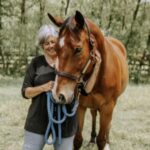
    KarenM replied 3 years, 11 months ago 3 Members · 5 Replies
  • 5 Replies
  • Doc-t

    Administrator
    December 13, 2021 at 1:05 pm

    I, and many others, feel your pain. Remember the ancestry of TB’s are from a mix from deserts and the UK. I have asked before, how do you feed a Paso, an Icelandic and an Arabian all living in Biloxi Mississippi?

    Horses are nomadic – they migrate seasonally much like New Yorkers drive south to FL in winter. When we become responsible for a fragile horse it becomes close to a nightmare. Mud, temp swings, humidity all add to the other stresses of community bad guys (grooms, owners, other horses), housing (ventilation, cleanliness, noise) and bad food and insects.

    What we found is that we can only control what we can control and the rest we do the best we can. We provide the best food, the cleanest environment, the turn out schedule that works and everything else needed (high velocity fans, heated water, fly sheets, winter blankets, etc…).

    And of course, when I look at the “stuff” happening around me I turn to myself and focus on gratefulness. In my podcasts about “Three dimensional communication part 1 and 2” I talk about the anatomy of the brain where the negative thoughts come from the left lambic system while gratefulness accesses the right lambic system. When I start to become frustrated I too rant, but then I list all I am grateful for and I start to feel better and dig into the problems in front of me.

    Not that you asked for this lecture, but maybe you were looking for something. I hope this helps. Doc T

    • KarenM

      Member
      December 14, 2021 at 7:29 pm

      Those podcasts came to mind, actually.

      I generally keep a “doing the best I can” attitude and I don’t worry too much about what I can’t control. Once in a while the steam has to leave the kettle, though. I have been through the ringer with this horse, or at least it feels like it. I have never had one this expressive and this sensitive. Steep initial learning curve. I still caution/instruct people who are new to him. He tells me if they’re authentic. Two weeks ago I had someone out to work with us on liberty. That person has pretty strong energy, although very kind and knowledgeable, and I suspected he might be suspicious of her. Sure enough, he was fine as long as she kept her distance but she walked toward us and he shot her a warning kick and glared while she was still about 10-15′ away. If I have an issue with him, the first thing I do is check myself, then check the environment. I’m grateful that he trusts me and and is so communicative. That said, it would be much easier if he were in the back yard so every day wasn’t some kind of Who’s Behind Door Number 1 exercise. Whew.

  • AngelaM

    Member
    December 13, 2021 at 6:01 pm

    I had no idea that temperature swings were a factor in colic. I read your post yesterday and thought “hmmm…maybe it’s particular to their region”. Then today I learned of a horse that died from colic in my area (north shore of Lake Ontario) this week and we have had a lot of temperature swings. There may have been other factors but thank you for pointing out the temperature swing issue. So I understand your frustration but also want to thank you for pointing this out to me.

    • Doc-t

      Administrator
      December 14, 2021 at 8:30 am

      With temperature swings come changes in barometric pressure and I think that is the culprit- or both. Either way, when a horse is balancing between feeling good and feeling bad (ie, chronically inflamed, bad people, bad environment, hates their job, etc) it doesn’t take much to go over the edge. In other words, the catch phrase “colic” may appear similar but their roots are many and diverse.

      When we control what we can then the things out of our control (weather) can be handled by the horse (and us) better. I have learned this from living in a different hotel every night and driving with insane drivers around me for 220 nights a year for decades. I get my sleep, eat the best I can and touch base with the ones I love every day. The rest that appears in my life is better handled – like the snow days I had last February in TN and LA driving in horrible conditions. Or the horses who have not appreciated me or the stomach bug from the bad food. All handled with the things I can control and my love for what I do and the appreciations of horse owners everywhere. Same for our horses. This is what being the Horse’s Advocate is all about!

    • KarenM

      Member
      December 14, 2021 at 6:51 pm

      In my area of Georgia, while generally very mild, late fall and winter can be 3 seasons in one day. I suspect, as Doc said, my horse’s stress is primarily due to barometric pressure changes. I use colic in its literal definition since he had the Whitman’s Sampler of colic varieties for a few years.

Log in to reply.