
The Horse’s Advocate › Forums › No Grain Challenge › Feeding the senior horse
-
Feeding the senior horse
Posted by Kathy on November 2, 2024 at 10:46 amHi Doc T:
Our 26yo draft cross (still hacks regularly) no longer can chew well. I’m currently feeding him soaked alfalfa pellets, SBM, and Coolstance three times a day. I’m chopping very leafy alfalfa hay into small pieces for him to eat at mealtime and he is turned out the rest of time on pasture with access to grass hay with his buddies.
He has been completely grain free since 2018. He’s tested positive for cushings and is on presend.
Your article on senior horses says to feed whatever you need to in order to keep weight on. Several vets here have recommended senior feed. Is that going to give him more dense digestible calories than what he’s getting?
He doesn’t love the Coolstance and I’d like to simplify if I can. His body condition is about a 4 going into winter with the current routine I’d like to see a bit more weight on him from healthy food that’s easily fed and easily consumed. What do you suggest?
Appreciate your guidance. After all these years grain-free I am really resistance to the idea of feeding grain products again, but know I need an open mind to best care for this guy’s current needs.
Kathy replied 1 year ago 2 Members · 4 Replies -
4 Replies
-

Age makes feeding horses (and all of us) a bit more complicated. His age of 26 places him in the “Senior” category, but every horse differs. The good news is his inflammation is lower than most based on you feeding forage only; however, his BCS of 4 after a summer of pasture and his diagnosis of Cushing’s (PPID) tells me he isn’t getting the benefits of the food consumed.
Here are the questions I have:
- Can he chew grass well (better than hay and soaked alfalfa pellets)?
- How much time is spent on the pasture, and what is the condition of the pasture?
- What was his BCS last spring? Is his current BCS increasing or decreasing, or is it no change?
- I assume the positive Cushing’s test (high ACTH) is his first, or have you tested several times during the year?
There are two things I want to address.
- Experts in PPID say the disease is a neurodegenerative disease. Further, they say that diagnosing PPID only on a blood test is not sufficient to make this diagnosis. The horse must also show signs of condition loss, including an unthrifty look.
- A “Catabolic Crisis” occurs in humans when muscles decrease in size with age. In horses over 25 years old, this is seen as a diminishing top line, loss of masseter (cheek) muscles, and a distended abdomen (hay belly).
Can you answer the four questions above and address the two things I need clarity on? Does he show signs of being unthrifty, and has he lost muscle?
Podcasts 127 (Building Muscle In Horses With Protein), which addresses the “Catabolic Crisis,” and 132 (The Flow Of Metabolic Energy In Horses) may be of interest to you. Listen to them at 1.25x or faster speed to stay focused on the information.
How much SBM is he eating? The suggestion of 1 pound per 1200-pound horse is a minimum; older horses with muscle loss often need 4 to 5 times that (adjusted to their healthy body weight). Yet even then, muscle development may not occur due to age-related factors (hormones, mitochondrial inflexibility).
It must be remembered that eating pasture and hay is a high-sugar source, which drives the catabolic crisis even when fed high-quality protein. The quandary occurs when more calories need to be fed because of the approaching winter and decreasing body fat. That is why I say to feed “anything” that adds body fat to help horses through the winter.
Energy flux (the energy flow from food through its use as fuel) must be understood here. Listen to that podcast, which shows that adjusting food is only one aspect of adding or subtracting body fat. The other is improving metabolism by eliminating inflammatory foods, increasing exercise, and building muscle mass. However, with age-related metabolism issues, some horses continue to lose fat and muscle despite their diet.
Improving metabolism in older horses (and humans) is challenging, but adding inflammatory foods worsens it. Adding more forage, whole grains (like de-hulled oats or corn, but not processed foods like Senior feeds), or fruit oil (from coconut meat / Coolstance) may make his remaining life more enjoyable; however, they may not add the body fat you’re seeking for him. Worse, it may cause a further decrease in cellular metabolism, but instead of adding body fat, it only decreases it. I’m unsure of this mechanism, but food energy is lost in the energy flux model. It may never be digested into fuels, but instead, it is passed out of the body unprocessed; the food calories never enter the flow.
If he were my horse, I would feed him as much SBM and pasture as he wants. I would protect him from winter elements with clean and dry shelter and judicious blanket use. If he continues to lose body fat, I would add Coolstance or de-hulled (cleaned) oats. I would monitor his attitude toward life daily because that is what’s most important in life at any age.
-
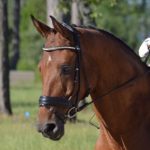
Thanks for the quick response.
(1) He does seem to graze okay but I don’t know how much he’s actually getting in. We just noticed in recent weeks that he’s not able to chew a mini Alfafa cube treat well.
(2) He’s out 24-7 (except for coming into stall for three meals a day) on burmuda pasture and last winter there was winter rye. We’ve been in a nasty drought for a couple months but have enough acreage to rotate so still have green grass but not lush. Want to put out winter rye but that’s pointless without rain.
(3) He came out of winter skinny but I told myself not to be too alarmed as we expect some weight loss over the winter. I upped SBM, added Coolstance, and expected spring and summer pasture to work their magic. Weight has gone up and down a bit. Currently I think it’s increasing but so is winter hair coat, which can be deceptive. I have added lunch, added alfalfa pellets and started chopping alfalfa for him the last month. Vet who saw him for first time last week wasn’t that alarmed but I think fluffy coat is helping appearances.
(4) Cushing test and diagnosis done early June. Only tested once. But definitely showed signs of condition loss and an unthrifty look. He has lost top line but does not have a hay belly. I think he looks better and has more energy since starting the prescend.
From vet on June 11 “Fibrinogen inflammation is just barely over range. Normal is less than four. There’s nothing else on here that is significant. The platelets being low is just a misread on our machine. Also, ACTH came back as 14.5 range goes up to 15 so he’s right there on the borderline. With what is going on, I personally would start him on medication. If you want a better answer, then we would do a TRH stimulation test.”
He’s getting 4-1/2 pds SBM a day plus Coolstance (he doesn’t love it) and alfalfa pellets and chopper alfalfa hay.
He gets steady exercise (hacks 2-3 times a week, takes an occasional jump, and moves around with his buddies on turnout) and has had no inflammatory food for six years.
Will he be able to chew oats? That is easy enough to add and I think he’d like it better than Coolstance.
Here is his bloodwork from June. I’ll listen to those podcasts, thanks for pointing me to them.
I appreciate your time and help. I haven’t cared for true seniors before, and now have two homebreds aged 26 and 27 that it’s my great privilege to care for, but it’s a learning curve and I want to do right by them.

-
I’m glad he’s grazing well. You would notice if the grass he took into his mouth fell out, and his BCS would plummet.
I love horses being outside 24-7; however, for old horses in winter and on really wet and miserable days, bringing them into a clean, dry, and windless area helps them.
Weight should ebb and flow with the seasons, but the changes can get “stuck” with older horses. I’m unsure of the exact cause, but the flow is off regarding energy flux. In other words, horses in winter should have increased energy flow due to reduced food intake and increased mitochondrial efficiency; the net effect is reduced body fat. In summer, the opposite occurs.
The problem with most horses under our care in winter is increased energy flow intake to prevent body fat loss. The extra food in the form of sugar prevents improved mitochondrial efficiency, which blocks the outflow of energy, resulting in fat gain. It’s perplexing to me why some older horses, especially those consuming large amounts of protein, continue to lose body condition in all seasons. My only thought is that the gut wall, or the gut microbiome, no longer absorbs or acts on the food given. If this is true, the horse is starving despite our efforts.
As caregivers, our only action for horses continuously losing body condition is to give good care. In this case, maintaining protein and adding calories with something easily digested will help. A single source, such as cleaned oats or corn, will add the calories needed without added inflammation. Rolling the oats or cracking the corn may help digestion; however, if any grain is seen in the manure, then the digestion of these foods is not occurring. As a last option, feeding a “Senior” feed with “pre-digested” ingredients (heated, extruded) may allow for calorie absorption, but with added inflammation.
No studies have taken older horses losing body condition and looked at addressing the gut microbiome, the histology of the gut wall, or analyzing the feces. There is no money for this research, and the feed companies have already made their “Senior” foods. Suggesting you try something, like a fecal transplant or feeding prebiotics, is just shooting in the dark.
Keeping them warm and dry, feeding them protein to avoid further and more rapid muscle loss, and offering exercise is the best anyone can do for all older animals. Doing this WELL BEFORE a problem developed was the best thing you did. The evidence for this is that, at 26, your horse still loves being alive, enjoys being in the pasture with buddies, hacking, and seems happy.
-
Just wanted to update that his weight has improved from soaking alfalfa pellets (fed with SBM) and offering chopped alfalfa each meal.
Log in to reply.